
TEF Blog
Role of self-assessment in language prep: 2026 guide
Role of self-assessment in language prep: 2026 guide

Self-assessment in language preparation is the deliberate practice of evaluating your own proficiency against concrete criteria to guide focused learning and track real progress. Known formally as learner self-evaluation, this process sits at the heart of modern language acquisition frameworks, particularly the Common European Framework of Reference for Languages (CEFR). Research confirms that self-assessment correlates strongly with externally measured proficiency when learners use structured criteria like CEFR “can-do” descriptors. That correlation matters because it means honest, structured self-evaluation is not guesswork. It is a reliable signal of where you actually stand.
The role of self-assessment in language prep extends beyond simple score tracking. It builds metacognition, which is your ability to think about your own thinking and learning. When you can accurately identify what you can and cannot do in a language, you stop wasting study time on skills you have already mastered and focus on the gaps that actually cost you points on formal assessments like the TEF or CELPIP.
How does self-assessment improve accuracy and awareness in language learning?
Untrained self-assessment produces unreliable results. Without structured criteria, learners tend to rate themselves based on how confident they feel rather than what they can consistently do. The fix is training yourself to use specific frameworks before you evaluate.
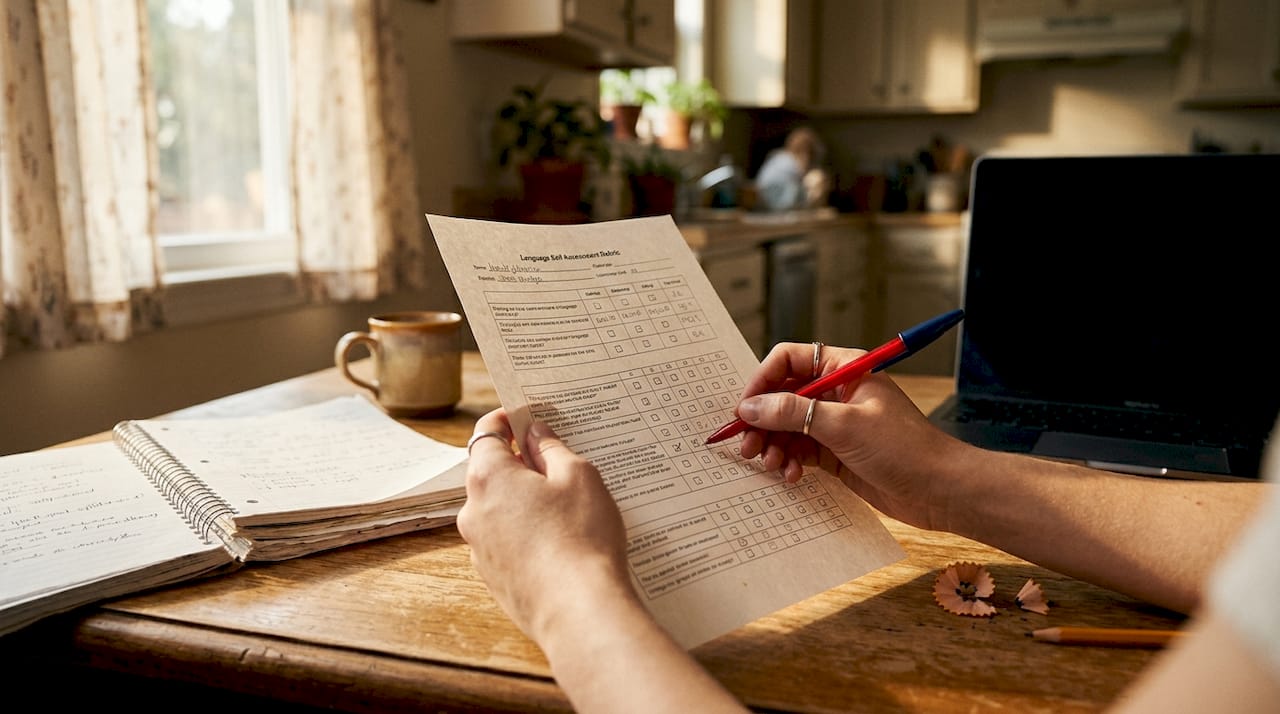
CEFR “can-do” descriptors are the most widely used tool for this. Instead of asking “Am I good at French?” you ask “Can I understand the main points of a news broadcast on familiar topics?” That shift from vague to task-specific is what makes self-assessment accurate. Self-assessment checklists from A2 to B2 improve accuracy, motivate learners, and reveal misunderstandings that would otherwise go unnoticed.
Frequency matters as much as method. Short, regular sessions of 5 to 15 minutes outperform occasional long reviews. A brief daily check after a study session, where you note what you could and could not do, builds a clearer picture over time than a monthly self-test. Learners typically require about 200 hours of practice to move from B1 to B2 level. Knowing that benchmark helps you set realistic expectations and measure whether your weekly hours are on track.
- Use CEFR “can-do” statements as your rating scale, not general impressions.
- Record specific tasks you attempted, not just whether you studied.
- Note the context: did you succeed in a quiet room or under time pressure?
- Rate consistency, not your best performance on a good day.
Pro Tip: Keep a task-specific performance record. After each practice session, write one sentence describing what you did and whether you completed it reliably. Review those entries weekly to spot patterns your memory would otherwise miss.
What are common challenges and limitations of language self-assessment?
Self-assessment has a well-documented accuracy problem that depends on your current level. Low-proficiency learners overestimate their abilities because they lack the meta-knowledge to recognise their own gaps. Advanced learners underestimate because heightened awareness makes every imperfection visible. Both biases lead to poor study decisions.
The second major pitfall is confusing peak performance with consistent performance. You might nail a speaking task on a relaxed Sunday afternoon and rate yourself as B2. But if you cannot reproduce that result under exam conditions or in a different context, that rating is misleading. Reliable task completion across contexts reflects actual proficiency far better than occasional high scores.
Self-assessment alone cannot close the gap between perceived and actual language ability. Peer assessment and teacher feedback improve the accuracy of self-ratings in ways that solo reflection cannot achieve.
Three additional challenges are worth knowing:
- Criteria confusion: Learners who do not understand what a level descriptor means will apply it inconsistently.
- Emotional interference: Anxiety or overconfidence on a given day skews ratings away from reality.
- Snapshot thinking: Rating yourself after one task rather than across multiple attempts inflates or deflates scores.
Training learners in understanding criteria greatly improves self-assessment accuracy and promotes reflective, autonomous learners. The practical takeaway: treat self-assessment as one input among several, not the final verdict on your ability.
How to effectively implement self-assessment strategies in your language prep
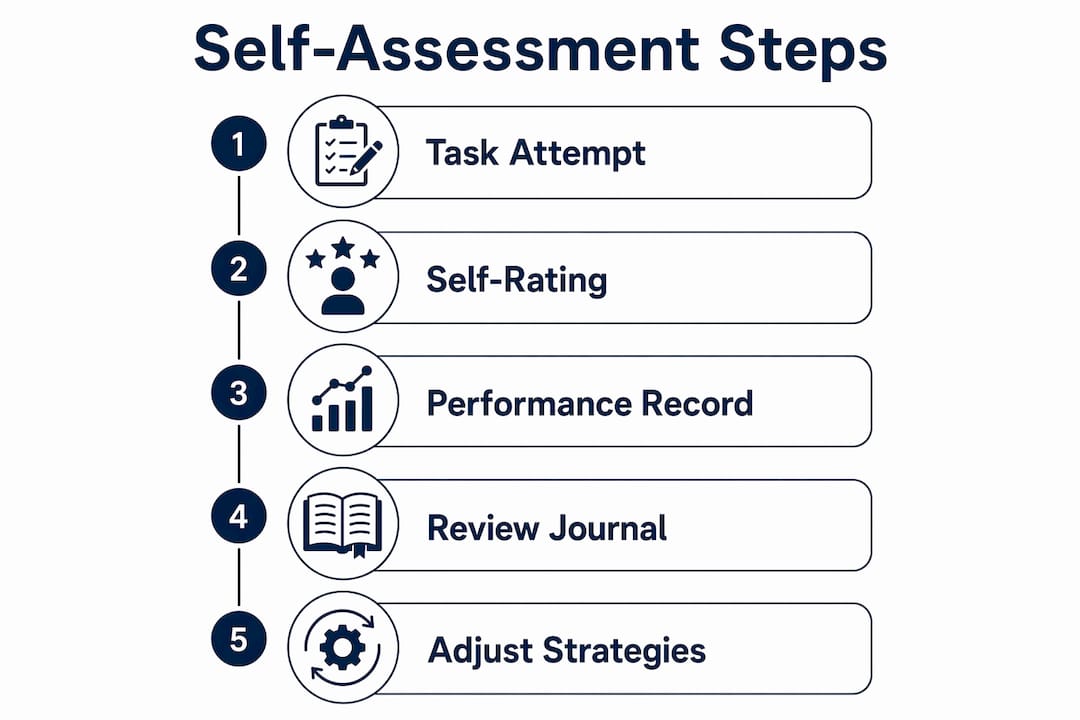
Effective self-evaluation techniques for language learning follow a clear cycle: attempt a task, evaluate your output against a standard, identify the gap, and plan your next practice step. Passive repetition of tests is less effective than intentional reflection tied to specific follow-up actions.
Here is a practical framework you can start using this week:
- Choose a CEFR-level checklist. Download or print a checklist matching your target level (A2, B1, or B2). Work through each “I can” statement and rate yourself honestly: always, sometimes, or not yet.
- Set up a language journal. After each study session, write two to three sentences describing what you practised, what worked, and what did not. Focus on real communicative tasks, such as summarising a podcast or writing a short email.
- Schedule brief daily check-ins. Five to fifteen minutes at the end of a session is enough. Consistency builds the data you need to see real trends.
- Compare your output to rubrics and exemplars. Combining rubrics, exemplars, and iterative comparison with your own outputs enriches self-assessment and builds feedback literacy. Use official TEF scoring criteria or CEFR sample texts as your reference point.
- Set a specific follow-up action. Do not end a self-assessment session without writing one concrete next step. “Practise listening to French radio for 10 minutes daily” is useful. “Improve listening” is not.
| Step | Method | Frequency |
|---|---|---|
| Task attempt | Complete a real communicative task | Daily |
| Self-rating | Use CEFR “can-do” checklist | After each session |
| Journal entry | Record task, result, and gap | Daily |
| Exemplar comparison | Compare output to rubric or sample | Weekly |
| Progress review | Review journal entries for patterns | Monthly |
Pro Tip: Review your journal entries at the end of each month. Look for tasks you rated as “sometimes” that have moved to “always.” That movement is your actual progress, and seeing it keeps motivation high during long preparation periods.
What role does self-assessment play alongside external language assessments?
Self-assessment and formal testing serve different purposes. They work best together, not as substitutes for each other. External assessments like the TEF give you a standardised, objective score. Self-assessment gives you the ongoing, granular feedback that formal tests cannot provide between sittings.
Self-assessment nurtures learner autonomy and feedback literacy, preparing learners for lifelong language use well beyond any single exam. The Goethe-Institut advocates self-assessment as a complement to teacher and formal assessment precisely because it shifts the learner from passive recipient to active participant in their own development.
The benefits of combining both approaches include:
- Better test readiness: When you understand the criteria examiners use, you can self-assess against those same criteria during preparation.
- Reduced test anxiety: Regular self-monitoring builds familiarity with your own performance patterns, so exam day holds fewer surprises.
- Faster gap closure: Knowing your weak areas between formal test sittings lets you target practice more efficiently.
- Lifelong learning habits: Self-assessment skills transfer to professional contexts long after the exam is over.
Self-assessment is central to process-oriented language assessment systems, enriching both lifelong learning and professional competence. Programmes like Dialang, a diagnostic language assessment tool developed by European researchers, demonstrate how combining self-report data with test performance produces more accurate learner profiles than either method alone. The lesson for TEF candidates is clear: use your formal mock exam scores alongside your self-assessment journal, not instead of it.
Key takeaways
Structured self-assessment using CEFR criteria is the most reliable way to monitor your language progress, close skill gaps, and prepare for formal assessments like the TEF.
| Point | Details |
|---|---|
| Use structured criteria | Rate yourself against CEFR “can-do” descriptors, not general impressions. |
| Practise consistently | Short daily sessions of 5 to 15 minutes build more accurate data than occasional long reviews. |
| Combine with external feedback | Peer and teacher feedback correct the biases that solo self-assessment cannot catch. |
| Follow the gap analysis cycle | Attempt a task, evaluate the result, identify the gap, and set a specific next step. |
| Pair with formal testing | Self-assessment and mock exams together produce more accurate learner profiles than either alone. |
Why honest self-assessment changed how I think about language prep
I have worked with language learners at every level, and the pattern I see most often is this: learners who skip self-assessment study hard but study the wrong things. They repeat what they already know because it feels productive. Learners who build a regular self-evaluation habit, even a simple five-minute journal entry after each session, consistently close gaps faster.
The uncomfortable truth is that most learners are not honest with themselves about consistency. They remember the day they aced a speaking task and forget the three days they stumbled. Task-based language journals fix that by creating a written record that memory cannot revise. When you read back through a month of entries, the real picture emerges.
I also think the fear of self-assessment holds many learners back. Rating yourself feels exposing. But a checklist is not a judgement. It is a map. The “not yet” items are not failures. They are your study plan. The learners I have seen reach their CLB targets are almost always the ones who embraced that mindset early and reviewed their progress honestly every single week.
My recommendation: start with one CEFR checklist at your target level, complete it today, and write down three “not yet” items you will focus on this month. That is the whole system. Everything else is detail.
— Reza
Tefguide resources to support your self-assessment practice
Knowing where you stand is only useful if you have quality practice material to close the gaps you find. Tefguide offers over 100 full mock exams and more than 5,000 practice questions across all four TEF skill areas: Listening, Reading, Writing, and Speaking.
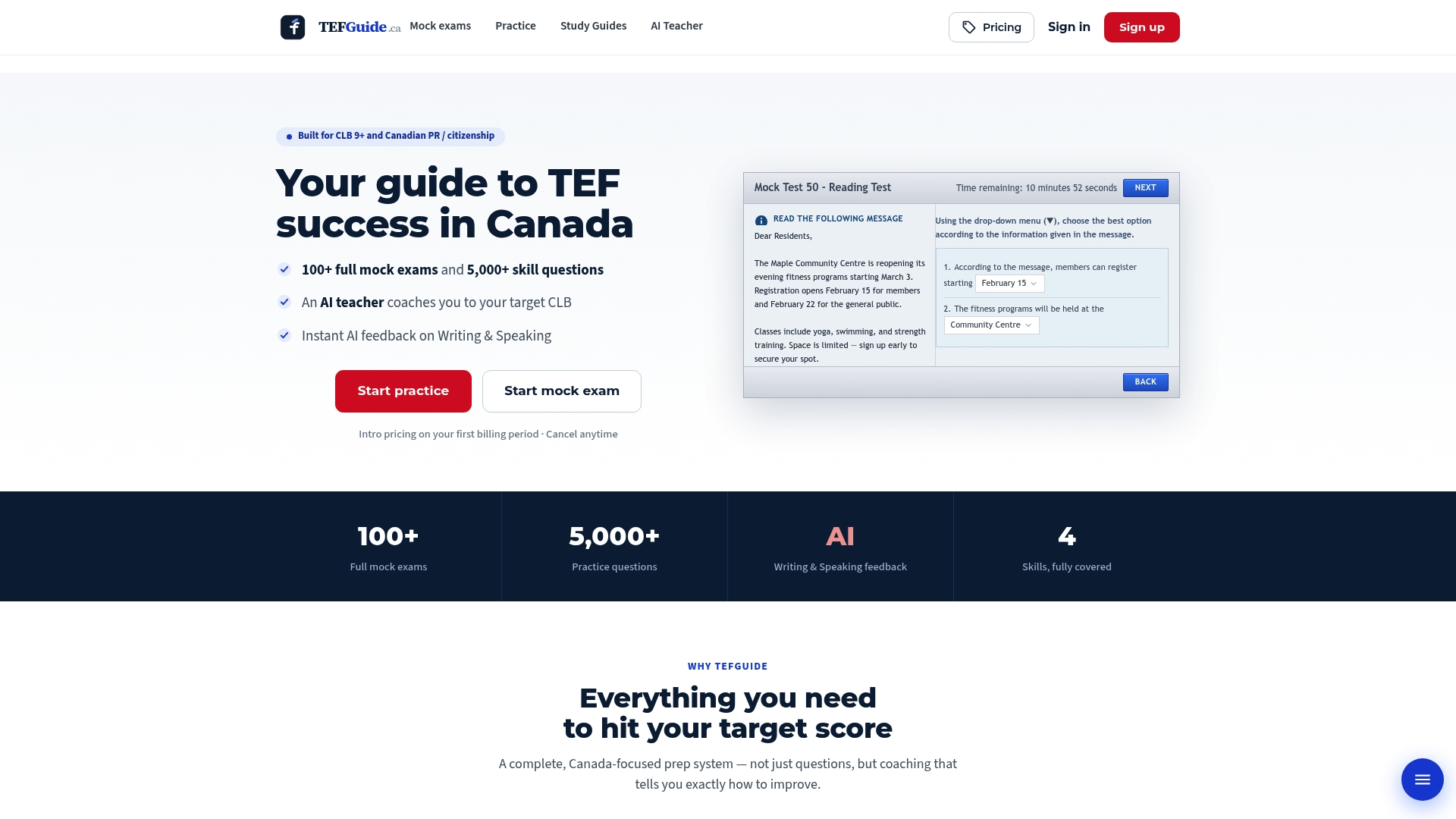
The AI-driven coaching system on Tefguide provides instant feedback on writing and speaking tasks, which means you get the external validation that self-assessment alone cannot deliver. When you combine your own CEFR-based self-ratings with scored TEF practice tests and AI feedback, you build the complete picture that leads to real score improvement. Thousands of Canadian immigration applicants have used this approach to reach their target CLB scores. Visit Tefguide to build a structured study plan that works alongside your self-assessment practice.
FAQ
What is self-assessment in language learning?
Self-assessment in language learning is the process of evaluating your own proficiency against structured criteria, such as CEFR “can-do” descriptors, to identify strengths and gaps. It supports metacognition and helps learners direct their own study more effectively.
How accurate is language self-assessment?
Accuracy depends on the criteria used. Self-assessment correlates strongly with external proficiency measures when learners use structured frameworks like CEFR descriptors rather than general impressions.
What are the biggest limitations of self-assessment?
The main limitations are cognitive biases: beginners tend to overestimate their level, while advanced learners tend to underestimate. External feedback from peers or teachers is needed to correct these biases.
How often should I self-assess my language skills?
Short sessions of 5 to 15 minutes after each study session are more effective than infrequent long reviews. Monthly journal reviews help you spot progress patterns over time.
Does self-assessment replace formal language tests?
Self-assessment complements formal tests but does not replace them. External assessments provide standardised scores, while self-assessment delivers the ongoing, detailed feedback that formal tests cannot offer between sittings.